Review: Radiate Positive Vibes Quote Design
As a designer who has spent countless hours hooping fabric and troubleshooting thread breaks, I approach every new machine embroidery design with a mix of optimism and skepticism. We have all been there: downloading a file that looks stunning on the screen but turns into a tangled mess of bird nests on the garment. Recently, I evaluated the Positive Quote Radiate Positive Vibes Quote to see if it holds up under the needle for real-world commercial and personal projects. This isn’t just about aesthetics; it is about functionality, stitch quality, and marketability.
First Impressions and Visual Personality
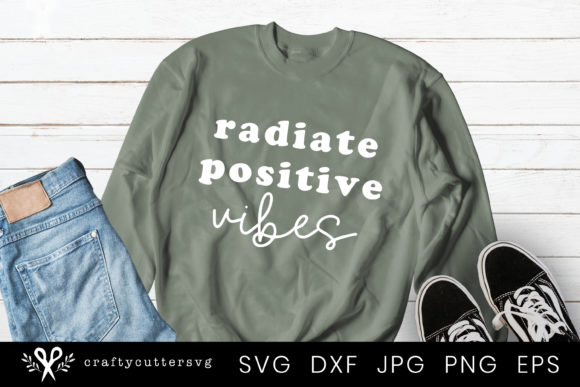
The first thing that strikes you about this design is its inherent warmth. In the crowded world of Crafts and digital assets, positivity sells, but only if it feels authentic. The layout of the Positive Quote Radiate Positive Vibes Quote suggests a balance between bold statement and decorative flair. It does not scream for attention with aggressive typography but rather invites the viewer in. For an embroidery project, this visual personality is crucial. It needs to read clearly from a distance while offering enough detail to reward closer inspection.
When I visualize this as a finished product, I see it working exceptionally well on items meant to comfort or inspire. The mood is uplifting, which makes it a strong candidate for gift-oriented markets. However, the devil is always in the details. As a reviewer, I look at the line weights and spacing. Are the letters too thin for a satin stitch to cover effectively? Is there enough negative space to prevent the fabric from puckering? These are the questions that determine whether a design is merely pretty or truly professional.
Real-World Application: The Tote Bag Test
To test the viability of this design, I imagined a specific client scenario: a local boutique owner wanting to create a line of reusable tote bag design options for their spring collection. She needed something that would appeal to eco-conscious shoppers who also value mental wellness. The Positive Quote Radiate Positive Vibes Quote fits this brief perfectly.
On a canvas tote, the design would likely require a fill stitch for the larger elements to ensure durability against daily wear and tear. If the design includes intricate swirls or small decorative accents, I would recommend using a running stitch or a lighter density fill to maintain flexibility. Canvas is sturdy, but it can be unforgiving if the stitch density is too high, leading to stiffness. By adjusting the underlay and stabilizer choice, this design can transform a simple bag into a high-value handmade product.
Beyond totes, consider sweatshirt embroidery. A crewneck sweatshirt provides a large, flat surface ideal for centered chest placements or back prints. The quote’s message resonates deeply in the athleisure market, where comfort and mindset intersect. Here, the texture of the fleece matters. You must ensure the design does not get lost in the pile of the fabric. Testing on scrap fabric is non-negotiable here to check thread tension and coverage.
Navigating Fabric and Hoop Constraints
While the design is versatile, it is not universal. There are specific scenarios where you should proceed with caution. For instance, placing this on a curved surface like a cap requires careful digitizing adjustments that may not be present in the base file. If the original file is intended for flat hooping, applying it to a structured cap could result in distortion.
Similarly, consider the hoop size. If you are working with a 4x4 inch hoop, you might need to scale the design down. This raises a critical issue: legibility. Small lettering can become illegible if scaled too far down, especially on textured fabrics like terry cloth towels or waffle-knit blankets. For baby embroidery, such as onesies or burp cloths, softness is paramount. High-density stitching can feel scratchy against sensitive skin. In these cases, I would advise checking if the design can be simplified or if an applique design version is available to reduce direct stitching on the garment.
Dark fabrics present another challenge. If you are stitching white or pastel threads on black cotton, you need excellent contrast and potentially a heavier underlay to prevent the background color from showing through. Always test your thread colors against your fabric choice before committing to a final production run.
Commercial Viability for Etsy Sellers
For the Etsy seller or small shop owner, this design represents more than just a pattern; it is a potential revenue stream. Products featuring positive affirmations have high shareability on social media, which drives organic traffic. A well-executed embroidered patch featuring this quote can be sold as a standalone accessory or used to upgrade plain denim jackets.
However, professionalism is key. Customers can spot poor stitching from a mile away. To maintain brand consistency and customer trust, ensure that your finished product is clean, with no loose threads or puckering. Use the right stabilizer for your fabric type—cut-away for stretchy knits, tear-away for stable wovens. This attention to detail elevates a simple craft item into a boutique-quality piece.
It is also worth noting the source of the file. The product description mentions compatibility with cutting machines like Design Space and Silhouette Studio. This suggests the file may be vector-based or optimized for cutting rather than traditional needle-and-thread embroidery. As a designer, I must clarify: if you are using this for machine embroidery, ensure you have the correct digital embroidery file format (such as PES, DST, or EXP) for your specific machine. Do not assume a SVG cut file will translate directly to a stitch file without proper digitizing software.
Practical Designer Notes
Before you launch this design into your craft business, take these practical steps:
- Test on Scrap: Never skip the test stitch. Use the same fabric and stabilizer combination you plan to use for the final product.
- Check Licensing: Confirm whether the license allows for commercial use. Some design assets are for personal use only, while others permit selling finished physical items but not digital files.
- Mockup Verification: Create printable mockup images to see how the design looks on different colored garments. This helps in marketing and setting customer expectations.
- Detail Inspection: Zoom in on the design preview. Look for tiny islands or disconnected paths that might cause thread breaks or jumps.
- Fabric Compatibility: Assess if the design works for both light and dark backgrounds. You may need to create two versions with different thread palettes.
In conclusion, the Positive Quote Radiate Positive Vibes Quote has strong potential for commercial embroidery and personalized gifts. Its success lies not just in the message, but in the execution. By respecting the limitations of your materials and machinery, you can turn this graphic into a standout item in your small shop product lineup. Whether it ends up on a holiday gift, a wedding favor, or a daily-use apron, the key is thoughtful application. Treat the design with care, and it will radiate quality just as much as it radiates positive vibes.